Mastering Aluminum Metal Casting: Premium Robust Parts for Manufacturing and Industry
Aluminum metal casting serves a crucial function in modern manufacturing. It offers manufacturers the ability to produce strong, lightweight components that can boost overall product performance. Various techniques, from sand to die casting, provide design flexibility and precision. Understanding the nuances of alloy selection and production processes can significantly impact the results. As industries evolve, so do the challenges and innovations in aluminum casting. What methods can enhance efficiency and quality in this vital process?
The Advantages of Aluminum Casting for Your Manufacturing Process
Aluminum casting offers numerous advantages that can considerably strengthen the manufacturing process. Its lightweight nature permits the production of pieces that are more convenient to manipulate and ship, consequently decreasing operational costs. Furthermore, aluminum provides exceptional corrosion resistance, enhancing the lifespan of components in multiple environments. The high thermal and electrical conductivity of aluminum makes it perfect for applications in automotive and electronics industries, where effective heat dispersal is vital.
In addition, aluminum can be effortlessly molded into complex shapes, allowing for intricate designs that meet specific engineering requirements. The process also provides reduced tooling costs and shorter lead times, which is vital in today's fast-paced market. Furthermore, the recyclability of aluminum supports sustainability efforts, making it an environmentally friendly choice. In summary, these advantages position aluminum casting as a worthwhile technique that can significantly improve efficiency and product quality in manufacturing.
Standard Methods Applied in Aluminum Metal Casting
Metal casting with aluminum uses different methods that serve diverse manufacturing requirements. Two primary techniques are die casting and sand casting, each providing distinctive benefits and applications. Grasping these techniques is essential for optimizing production efficiency and attaining desired final products.
Sand Casting Methods
Multiple sand casting methods are typically used in the aluminum metal casting process, each offering unique strengths depending on the project's needs. The most prevalent technique is green sand casting, which incorporates a mixture of sand, clay, and water. This method provides excellent moldability and is cost-effective for small to medium production runs. Another technique, referred to as resin sand casting, includes resin into the sand mixture, improving the mold's strength and surface finish. In addition, shell molding involves creating a thin shell of sand and resin around a pattern, providing better dimensional accuracy and smoother surfaces. Each technique is picked based on factors such as production volume, complexity of the part, and desired finish quality.
Die Casting Techniques
Numerous die casting methods are implemented in the aluminum metal casting industry, each tailored to meet specific production demands and design complexities. The two primary approaches are hot chamber and cold chamber die casting. Hot chamber die casting is well-suited for low-melting-point metals and permits for rapid production get the full story cycles, making it efficient for high-volume manufacturing. Conversely, cold chamber die casting is perfect for aluminum and other high-melting-point alloys; it requires injecting molten metal into cold molds, offering greater control over the metal's properties. In addition, pressure die casting provides uniformity and precision in the final product, while vacuum die casting reduces gas entrapment, improving part integrity. Each technique offers distinct advantages, making them essential for various industrial applications.
Selecting the Right Aluminum Alloys for Casting
Choosing the right aluminum alloy for casting is essential, as alloy composition directly impacts the final product's properties. Alignment with the chosen casting process also plays a vital role in achieving target outcomes. Furthermore, understanding the mechanical characteristics of diverse alloys can guide decision-making to meet particular application requirements.
The Importance of Alloy Composition
Selecting the right aluminum alloy is essential for reaching ideal performance in casting applications. The composition of aluminum alloys greatly influences their mechanical properties, corrosion resistance, and thermal conductivity. Standard alloying elements, such as silicon, copper, and magnesium, are added to boost specific characteristics like strength and ductility. For instance, silicon increases fluidity, making it perfect for intricate castings, while magnesium enhances strength, making alloys ideal for structural components. Understanding the composition permits manufacturers to pick alloys that satisfy the specific needs of the application, whether it be for automotive parts or industrial machinery. In the end, the right alloy composition not only ensures durability but also optimizes production efficiency and cost-effectiveness in the casting process.
Compatibility with Casting Processes
Understanding alloy composition is only one element of optimizing aluminum casting; the compatibility of the preferred alloy with specific casting processes is similarly important. Different casting methods, such as sand casting, die casting, and permanent mold casting, necessitate distinct alloy properties to achieve ideal results. For example, die casting often performs optimally with alloys with lower melting points and excellent fluidity, while sand casting may utilize alloys that exhibit strong strength and ductility. Moreover, the thermal and mechanical attributes of the alloy must align with the requirements of the chosen process to minimize defects and maintain dimensional accuracy. Finally, selecting the right aluminum alloy based on casting process compatibility is critical for producing high-quality, durable components designed for industry needs.
Mechanical Characteristics Overview
The mechanical characteristics of aluminum alloys are fundamentally important in identifying their fitness for different casting purposes. These properties, including tensile strength, ductility, hardness, and fatigue resistance, are critical factors in selecting the right alloy for specific industrial needs. Alloys like 356 and 319 are preferred due to their superior castability and mechanical behavior, rendering them perfect for automotive and aerospace parts. In addition, the alloy preference can determine corrosion resistance and thermal conductivity, characteristics that are basic to many applications. Understanding the balance between strength and weight is also important, as different alloys offer varying levels of performance. In the end, picking the proper aluminum alloy confirms that cast elements fulfill the rigorous demands of their designated purpose.
Recommendations for Effective Aluminum Casting Endeavors
Effective aluminum casting projects demand careful planning and attention to detail. To begin, it is essential to select the suitable aluminum alloy according to the desired mechanical properties and application needs. Correct mold design is essential; molds should be constructed to enable smooth metal flow and reduce defects. Moreover, maintaining stable temperatures throughout the casting process is critical for achieving reliable results.
Acquiring high-quality equipment, including furnaces and pouring systems, can significantly influence the outcome. It is also recommended to conduct comprehensive pre-casting inspections to discover potential issues.
Furthermore, implementing a structured quality control process helps ensure that the finished products satisfy industry standards. Lastly, logging each step of the process allows for enhanced analysis and improvement in future projects. By following these guidelines, manufacturers can enhance the efficiency and success of their aluminum casting operations.
Troubleshooting Typical Aluminum Casting Issues
With thorough planning and execution, aluminum casting processes can face various challenges that may influence the final product. Frequent challenges consist of porosity, which results from trapped gases during the casting procedure, causing weak spots in the casting. To resolve this, it is vital to optimize the melting temperature and provide proper venting in molds.
Another frequent issue is dimensional inaccuracy, typically attributable to temperature-related contraction or faulty mold setup. Routine mold calibration and accurate temperature management can reduce these variations.
Surface flaws such as roughness or inclusions can occur due to contamination or insufficient surface preparation. Using thorough cleaning and degreasing protocols is essential to obtaining a smooth finish.
Finally, poor filling may result in incomplete castings. Ensuring sufficient pouring speed and utilizing proper gating designs can help obtain better mold filling and overall casting quality.
New Breakthroughs in Aluminum Casting Methods
As industries continue to evolve, modern innovations in aluminum casting techniques are transforming manufacturing processes. Cutting-edge technologies such as 3D printing have appeared, allowing the creation of complex geometries and reducing lead times significantly. This technique allows for rapid prototyping and customization, synchronizing production with specific client needs.
Additionally, the integration of computational simulation tools facilitates precise mold design, improving accuracy and decreasing material waste. Techniques like vacuum die casting and squeeze casting are increasingly adopted, providing superior mechanical properties and surface finishes.
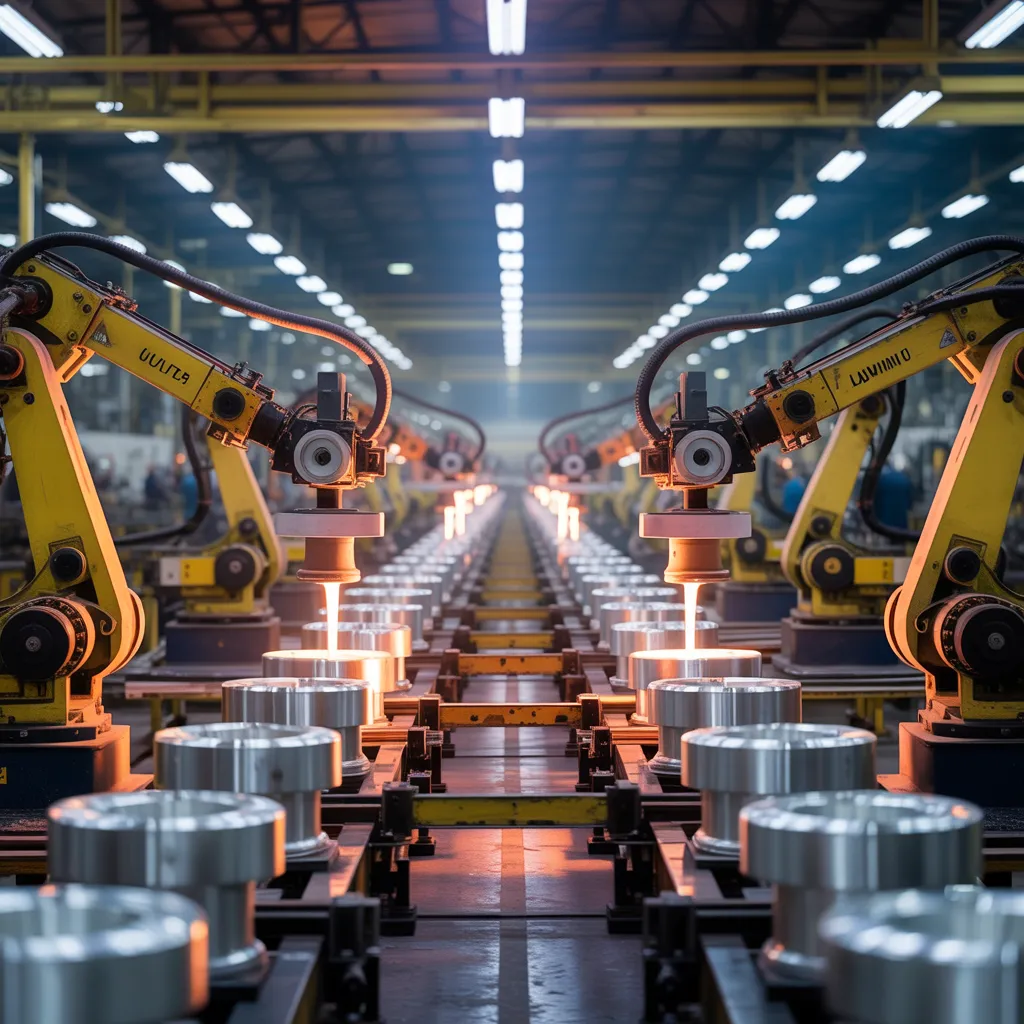
In addition, progress in alloy development are creating lighter but more durable aluminum materials, increasing their applicability across various sectors. Robotic systems and automation in the casting process improve operations, boosting efficiency and reducing labor costs. Combined, these innovations are establishing new standards in aluminum casting, improving product quality and sustainability while meeting the growing demands of modern industries.
Real-World Applications of Aluminum Cast Parts in Various Industries
The developments in aluminum casting technologies have substantially expanded the breadth of applications across multiple industries. In the automotive sector, aluminum cast pieces are utilized for engine blocks, transmission housings, and wheels, contributing to vehicle lightweighting and improved fuel efficiency. Aerospace manufacturers prefer aluminum castings for structural components due to their strength-to-weight ratio, improving performance without jeopardizing safety.
In the electronics industry, aluminum casings are frequently employed for devices, delivering protection while effectively dissipating heat. Additionally, the construction sector employs aluminum cast parts in window frames, roofing, and architectural elements, taking advantage of their durability and resistance to corrosion.
Moreover, the energy sector makes use of aluminum castings for turbine housings and other essential components, providing reliability in demanding environments. In general, the versatility of aluminum cast parts continues to drive innovation and efficiency across several industries, showcasing their vital role in modern manufacturing.
Frequently Asked Questions
Which Safety Precautions Are Necessary During Aluminum Casting?
When conducting aluminum casting, individuals should don protective gear, guarantee proper ventilation, handle molten metal safely, keep a clean workspace, use safety equipment including gloves and goggles, and recognize potential fire hazards.
What Are the Ways to Improve Aluminum Casting Surface Finish?
To enhance the surface finish of aluminum castings, one can employ strategies such as improving mold design, utilizing finer sand for casting, implementing optimal cooling rates, and implementing post-casting treatments such as sandblasting or polishing.
Which Equipment Is Essential for Small-Scale Aluminum Casting?
Essential equipment for small-scale aluminum casting includes a furnace for liquefying, molds for molding, a ladle for transferring, safety gear for safeguarding workers, and tools for post-casting work. These items provide efficient and quality production in compact operations.
How Can Environmental Regulations Shape Aluminum Casting Operations?
Environmental laws substantially affect aluminum casting operations by placing restrictions on emissions, waste management, and resource usage. Compliance often necessitates investment in eco-friendly technologies, which can boost operational costs but ultimately advance sustainability and public health.
What Financial Investment Is Required for Setting up Aluminum Casting Facilities?
Setting up aluminum casting operations incurs numerous costs, including equipment purchase, facility development, raw materials, labor, and compliance with environmental standards. These expenditures can substantially affect initial investment and continuing operational budgets for fabricators.